Updated on October 28, 2026
CCTV monitoring means that the cameras on your property are watched live by trained operators in a monitoring center, rather than simply recording to a hard drive for someone to review later. When the operator sees an intruder, they act: a loudspeaker warning, strobes, and a call to the police with a live description while the person is still on site. The difference between a recorded camera and a monitored one is the difference between evidence of a theft and a theft that did not happen.
Mobile Video Guard is a Bowie, Maryland security company that provides live-monitored mobile surveillance to construction sites, yards, dealerships and commercial properties in all 50 states. This page explains how remote CCTV monitoring works, the kinds of service sold under that name, what it costs, and what to ask a provider.
Recorded, self-monitored or professionally monitored
Three very different things are sold as “CCTV monitoring”:
- Recorded CCTV. Cameras record to a recorder or the cloud. Nobody watches. Useful for finding out what happened; useless for stopping it. Most commercial camera systems are this.
- Self-monitored. The system sends motion alerts to your phone. At 3 am you are the monitoring center. Alerts are frequent, most are nothing, and when one is real you are watching a crime with no way to intervene.
- Professionally monitored. Analytics filter the alerts, trained operators look at every real one within seconds, and they have tools on site, a loudspeaker and strobes, plus a direct line to the police. This is what the rest of this page is about.
How professional remote monitoring works
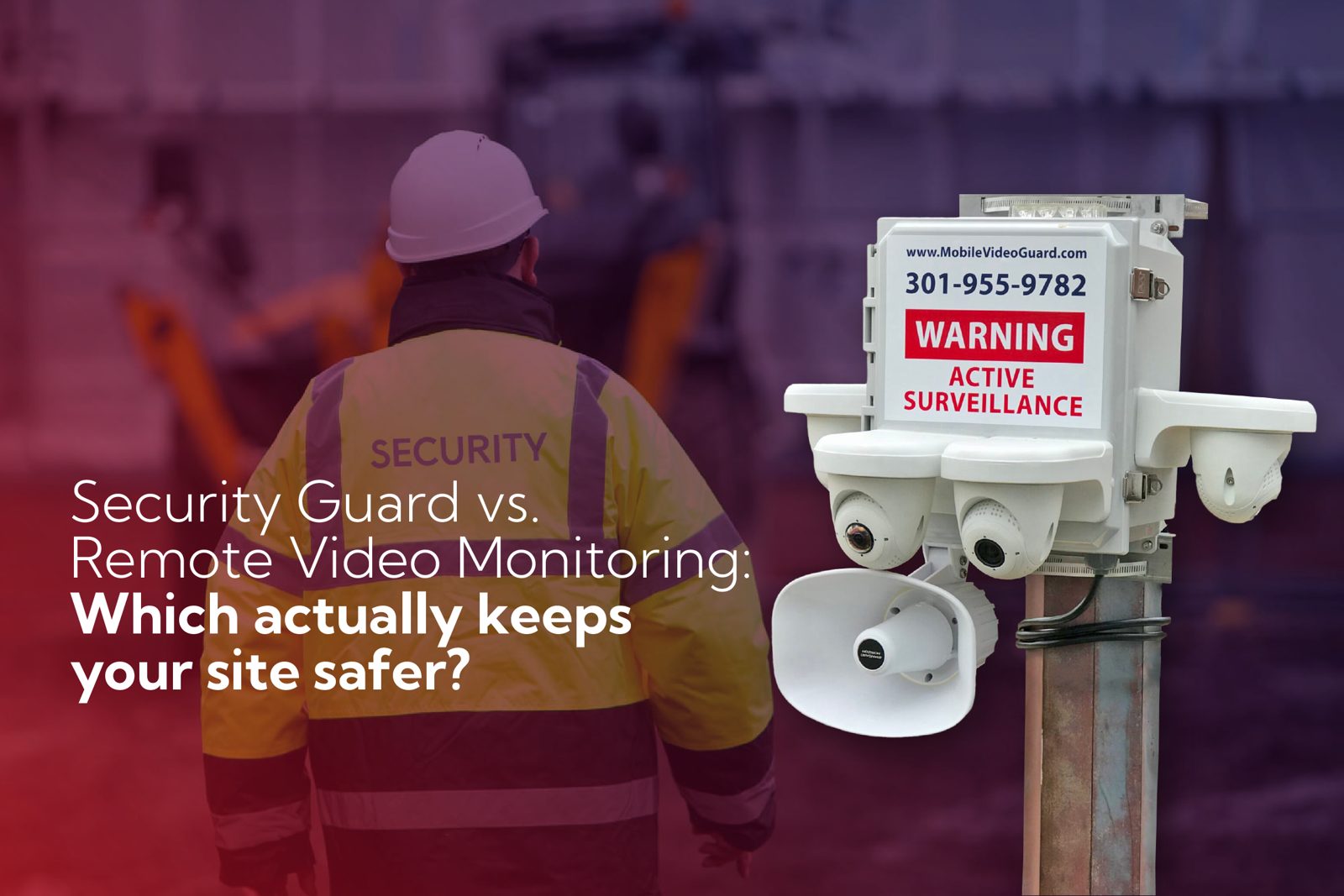
- Cameras and connectivity. Cameras cover the areas that matter. On a temporary or remote site this is usually a mobile unit: a trailer or pole with several cameras, night vision or thermal imaging, solar power and cellular video, so it needs nothing from the site.
- Analytics. Software detects people and vehicles and ignores animals, weather, shadows and traffic on the road beyond the fence. This is what makes watching hundreds of sites at once possible.
- Operator assessment. When analytics flag an event, an operator looks at the live feed within seconds and decides whether it is a worker who stayed late or a threat.
- Intervention. For a threat, the operator speaks through the unit’s loudspeaker, describing the person so they know they are being watched, and activates strobes. Most people leave at this point.
- Police dispatch. If they do not, the operator calls the local police with a live description and stays on the feed to update responding officers. Police treat a live, verified report as a crime in progress, which gets a faster response than an unverified alarm.
- Evidence. The incident is clipped as it happens and shared with the client and the police.
Monitoring runs on an agreed schedule, typically the hours a site is empty, with 24-hour coverage available.
Where it is used
- Construction sites, where there is no power, no internet and a changing layout, and theft of equipment and materials is routine. Construction site CCTV is the most common use of monitored mobile units: a trailer arrives, raises its mast over the fence line, and is watched from the first night.
- Equipment and materials yards and warehouses and logistics yards, for trailers, fuel, metal and stock.
- Car dealerships, for overnight lot protection against vehicle and catalytic converter theft.
- Multifamily properties, for parking areas and amenities after hours.
- Commercial buildings, vacant properties, utility sites and event venues.
What it costs
There are two common pricing models. Monitoring companies that watch cameras you already own usually charge per camera per month, on top of what you paid for the cameras, installation and connectivity. Providers that supply the equipment, as Mobile Video Guard does, charge a flat monthly fee per site that includes the unit, the data, the monitoring, moves and incident footage, with no long-term contract. For sites that currently use a guard, the monitored unit is typically a fraction of a single overnight post. Request a quote with the site address and dates and we will come back the same business day.
What to ask a provider
- Is a person watching live, and how quickly do they look at an event?
- Can the operator speak through the camera and trigger strobes on site?
- Who calls the police, and do they stay on the line with a description?
- Do the cameras work with no site power or internet?
- What exactly is in the monthly price?
- How quickly can equipment be on site, and how quickly can it move?
- How is footage delivered after an incident, and how fast?
- Is the provider a licensed security agency in your state?
Frequently asked questions
What is the difference between CCTV and CCTV monitoring?
CCTV is the cameras. Remote monitoring is a person watching them live from a monitoring center and acting on what they see. Cameras alone record a crime; monitored cameras interrupt it.
Can I have my existing cameras monitored?
Some monitoring companies watch customer-owned cameras for a per-camera fee. For temporary or remote sites it is usually simpler and cheaper to rent a complete monitored unit, because the cameras, power, connectivity and monitoring arrive together.
Does remote monitoring work without internet?
Yes. Mobile units use cellular modems and solar power. The provider should confirm carrier coverage at your address before delivery.
How quickly does an operator respond?
Analytics flag an event in seconds and an operator looks at the live feed immediately. A loudspeaker warning typically follows within a minute of the person entering the covered area.
Is remote monitoring cheaper than a guard?
For overnight coverage of a commercial, industrial or construction site, substantially. Clients replacing guard coverage typically report savings of 60 percent or more, with the whole site covered instead of one post.